
Monterey Park Wood Flooring provides hardwood floor staining in Monterey Park, CA, drawing on more than 20 years of sanding and finishing wood floors to get color right the first time. We stain red oak, white oak, maple, hickory and engineered floors, from natural and light Scandinavian tones to deep browns and grays, and we correct stain jobs that have gone wrong.
Stain is the step where a floor either comes out the way you imagined or does not, and it cannot be undone without sanding the whole floor again. That is why every stain color is tested on your own sanded boards, in the room’s own light, before we commit to the whole floor. A color chip in a showroom or a sample on someone else’s oak is only a starting point.
We also see many floors after a DIY staining attempt: blotchy maple, tacky stain that never dried, color far darker than expected, or oak that turned orange under the finish. Most of these can be put right, and we explain the fix before quoting it.
Choosing a Stain Color
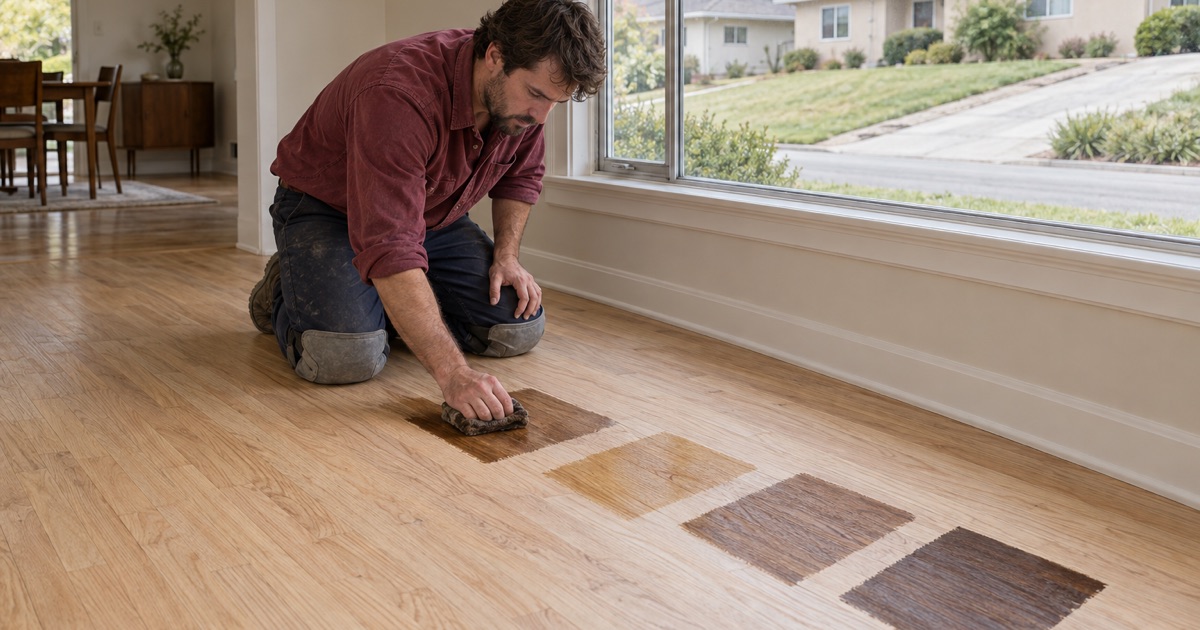
Sample Boards on Your Own Floor
After the final sanding pass, we apply several stain colors in patches on the floor itself, including a natural patch with finish only. Each sample is sealed with the same finish that will be used on the floor, because finish changes how a stain looks.
You view the samples in the morning and afternoon, with the lights you use at night, and next to your cabinets, trim and furniture. Only once you have chosen is the whole floor stained.
How Species Changes Color
The same stain looks different on each species. Red oak has pink undertones and open grain that holds stain strongly. White oak is more neutral and takes gray and natural tones well. Maple and birch are dense and absorb stain unevenly, while hickory shows dramatic variation from board to board.
When a room has mixed species, such as new white oak added to an old red oak floor, we test on both so the final color reads as one floor rather than two.
Light, Dark and Gray Tones
Light and natural tones hide dust and pet hair and make rooms feel larger, but show dark scuffs. Dark stains look rich but show dust, scratches and footprints more readily. Gray and cool tones depend heavily on the species and the finish, since an amber finish can warm a gray stain toward brown.
We talk through how the room is used and who lives in it before recommending a direction. The samples on your own floor then make the final case.
Getting an Even Color
Sanding Before Staining
Stain shows every flaw in the sanding. Drum marks, chatter marks and swirls from an orbital sander that are nearly invisible on bare wood become obvious once stain goes on. We sand through the full abrasive grit sequence and inspect under raking light before staining.
The final sanding pass is also blended carefully at the edges, where an edger cuts at a different angle than the drum sander, so the stain does not pick up a halo along the walls.
Water Popping for Deeper Color
Water popping means lightly dampening the sanded floor so the grain opens and stands up slightly. The wood then takes more stain and takes it more evenly, which helps with darker colors and reduces blotching on some woods.
It adds a drying step before the stain goes on. It must also be done evenly across the whole floor, or the popped and unpopped areas will stain differently.
Controlling Blotching on Maple and Birch
Maple and birch are closed-grain woods that absorb stain unevenly, producing blotches even on a well-sanded floor. For a darker look we may use a sealer or conditioner coat, a gel stain that sits more on the surface, or dye-based products.
When the samples show that no stain will look even on your maple, we recommend a natural finish and explain why. That is better than staining the whole floor and hoping.
Fixing Stain Jobs That Went Wrong
Blotchy, Streaky or Lap-Marked Floors
Blotching, streaks and lap marks usually come from uneven sanding, stain applied too heavily in some areas, or stain wiped off too late as it began to dry. Once finish is on top, they cannot be spot-fixed.
The reliable repair is to sand the floor back to bare wood and restain it with proper technique. We check how much wood is left before recommending this, especially on engineered floors.
Tacky Stain and Finish Adhesion Problems
Stain that stays tacky has usually been applied too heavily or has not been given enough drying time in cool, damp conditions. Finish applied over it can wrinkle, peel or stay soft.
If no finish has been applied yet, we can often wipe back the excess and let the stain cure fully. If finish has already gone on over tacky stain, sanding and restaining is usually the only lasting fix.
Too Dark or Too Orange
A color that came out darker than expected, or an oak floor that turned orange under an amber finish, can be corrected by sanding back to bare wood and choosing again with sample boards. A cooler stain base or a clear waterborne finish often solves the orange problem.
Stains Legal in the South Coast Air District
Compliant Products and Lower Odor
Monterey Park falls within the South Coast Air Quality Management District, where Rule 1113 sets volatile organic compound limits for wood stains, including 250 grams per liter for interior stains, as well as a separate limit for clear wood coatings. Some stains sold nationally cannot legally be applied here.
We choose compliant oil-based and waterborne stains that give the colors you want, and pair them with compliant finishes, so the whole system on your floor meets local rules and is designed to work together.
- 20+ Years on Wood Floors
- Itemized Written Quotes
- Lead-Safe Checks on Pre-1978 Homes