Sloping or Bouncy Floors Over a Crawl Space
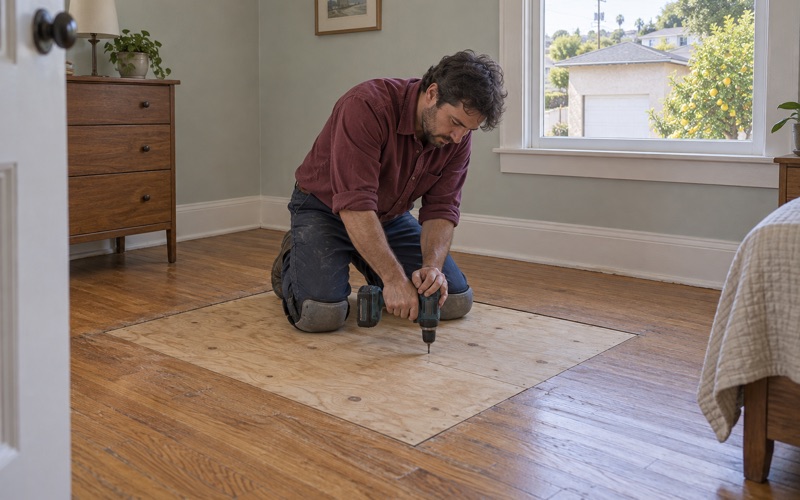
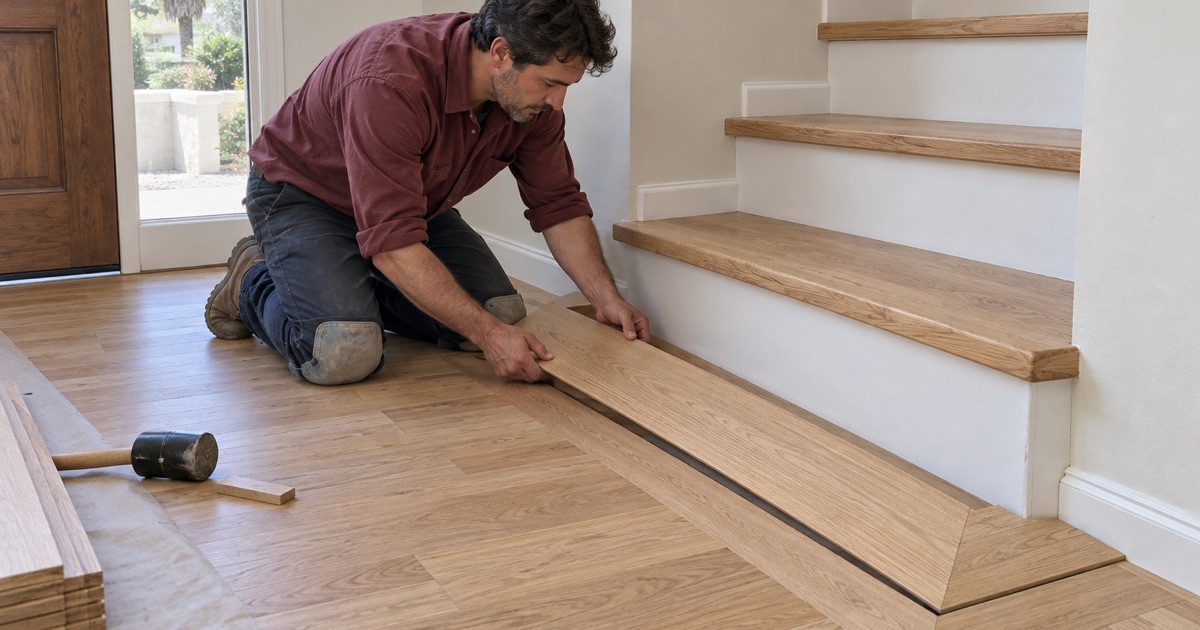
A floor that slopes toward one wall, sags in the middle of a room or bounces underfoot is usually describing the framing rather than the boards. On a raised foundation we go under the house to check floor joists, posts, the cripple wall and the plywood or board subfloor, then sister a cracked joist or shim a settled post before any finish work. Fixing the structure first keeps the refinished surface level instead of opening the same crack next year.
Cupped and Crowned Hardwood Boards
Cupping, where board edges rise above their centers, means the underside has taken on more moisture than the top; crowning is the reverse and often follows a cupped floor that was sanded too soon. We take moisture meter readings across the floor and below it, find the source, and let the boards settle toward equilibrium before deciding whether sanding is needed at all. Rushing that step is how a crowned floor gets made.
Drywood Termite Holes or Old Nail Holes
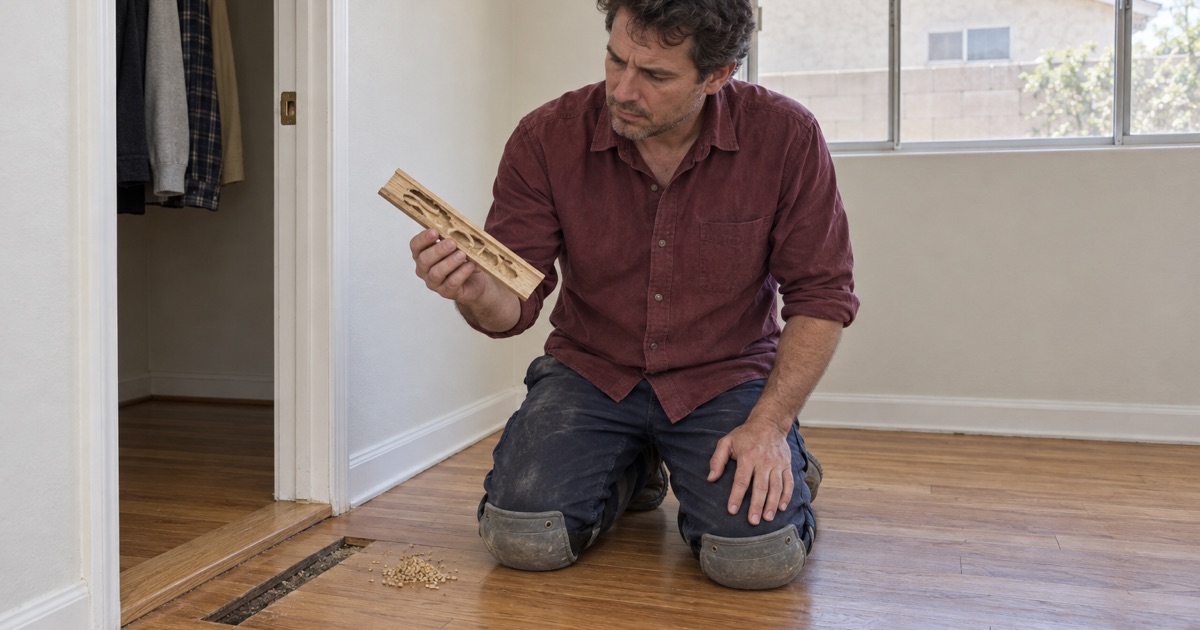
Tiny round kick-out holes with small piles of pellet-shaped termite frass nearby point to drywood termites, while an old face-nailed floor shows larger holes in straight rows with no pellets. We probe the surrounding wood, check the underside where it can be reached, and tell you plainly which one you have. When it is termites, the colony is treated by a pest control company before we replace boards, so new wood is not laid into an active infestation.
Pet Urine and Black Water Stains in Oak
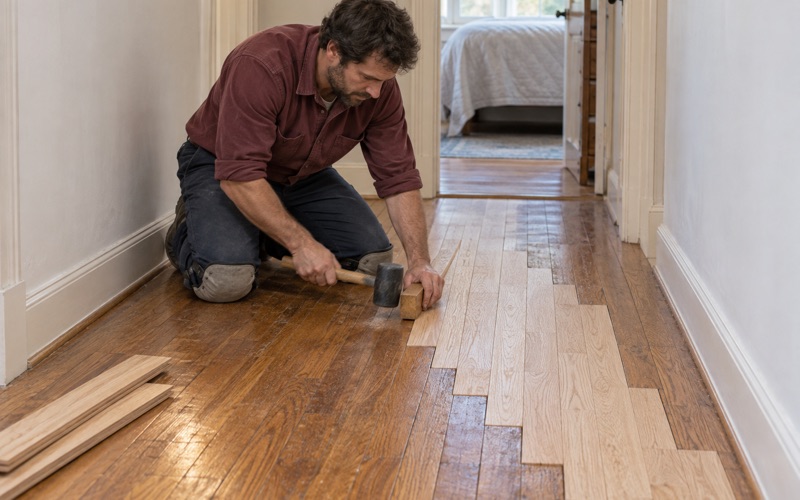
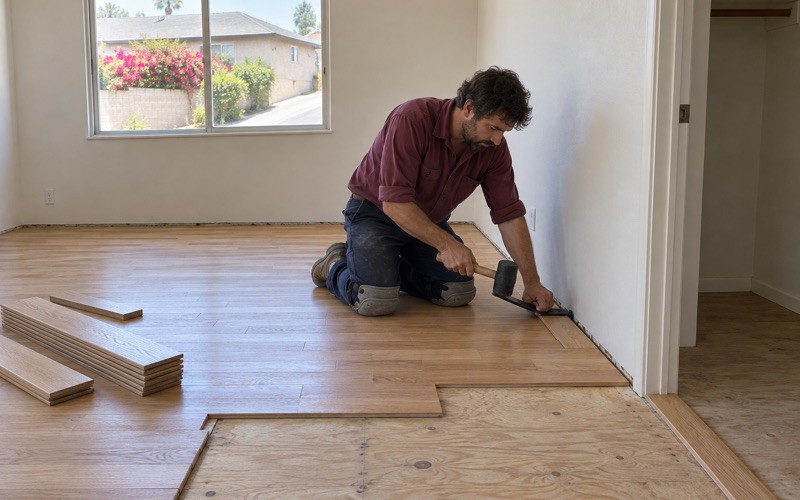
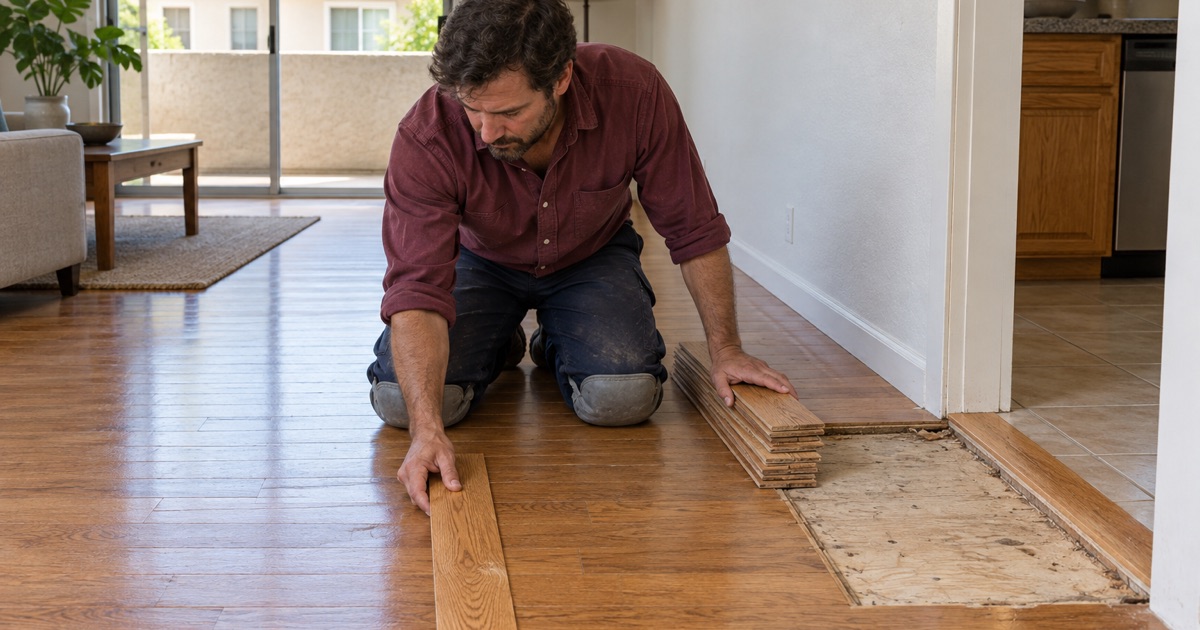
Dark gray or black rings from a pet, a potted plant or a slow appliance leak mean water has soaked into the fibers and reacted with the wood’s tannins, which is why sanding seldom lifts them. We sand a small test area to see how deep the stain runs, then recommend a board replacement woven into the existing rows or, for lighter marks, a stain color that blends them. You get that answer before paying for a refinish that would leave the mark in place.
Burst Supply Lines and the First Two Days
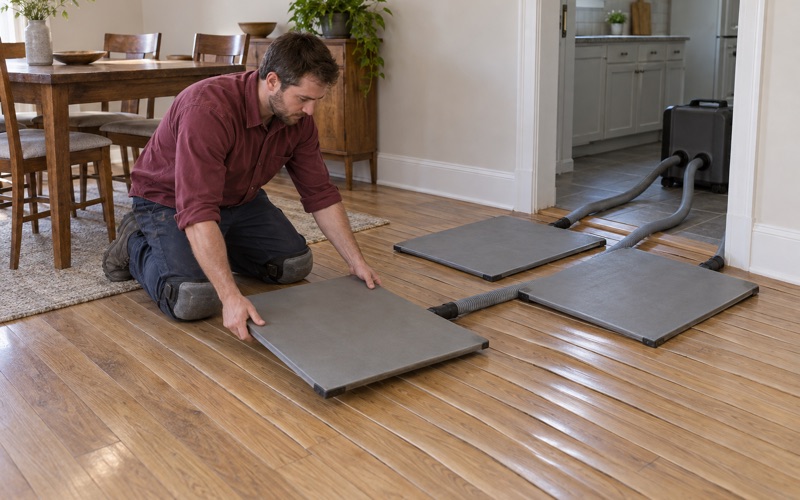
When a supply line under a sink or behind a refrigerator lets go, what happens in the first two days decides how much of the floor survives. Stop the water, lift wet rugs and furniture, start air moving, call your insurer, and have the floor measured for moisture before anyone decides to tear it out. We document the readings and photographs for the adjuster and write a repair scope based on what the wood actually shows.
Squeaks, Popping and Hollow Spots
A squeak is usually a board rubbing on a loose flooring cleat or staple, or a gap between the subfloor and a joist, which is annoying but seldom structural. A hollow spot on a glue-down floor, or a soft spot that gives underfoot, is different and can mean failed adhesive, a delaminated subfloor or rot from an old leak. We locate each noise, fix it from below where the framing is reachable, and tell you which ones matter.
Peeling, Cloudy or Worn-Through Floor Finish
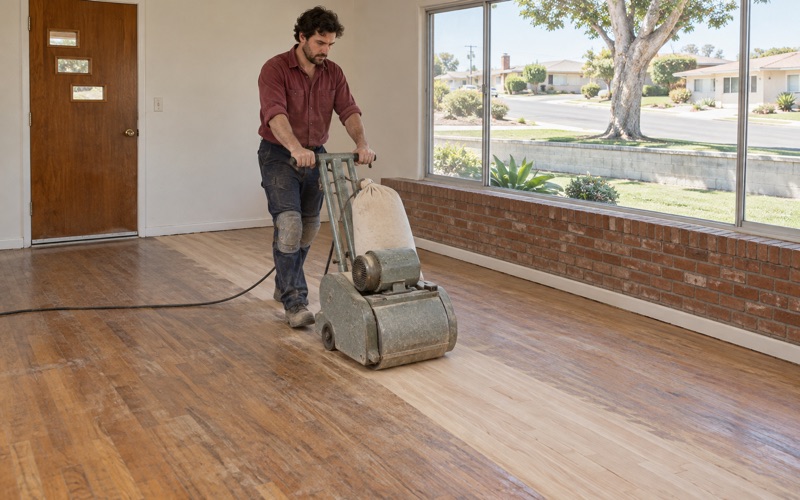
Finish peeling in sheets often means a recoat went over wax, polish or an incompatible product; a white haze can be trapped moisture or polish buildup; a worn-through lane in a hallway means bare wood is taking the traffic. We test adhesion and look at the finish layers before recommending anything. The fix ranges from a deep cleaning and screen and recoat to a full sand to bare wood, and the diagnosis sets the price.
Seasonal Gapping Between Hardwood Boards
Solid hardwood gains and loses moisture with the indoor air, so thin gaps that open in the dry months and close again in the damper ones are normal seasonal gapping. We do not fill gaps that will close on their own, because filler forced into a moving joint cracks out or pushes the boards into crowning. Gaps that stay open all year point to a moisture or installation problem, and that is what we then trace.